
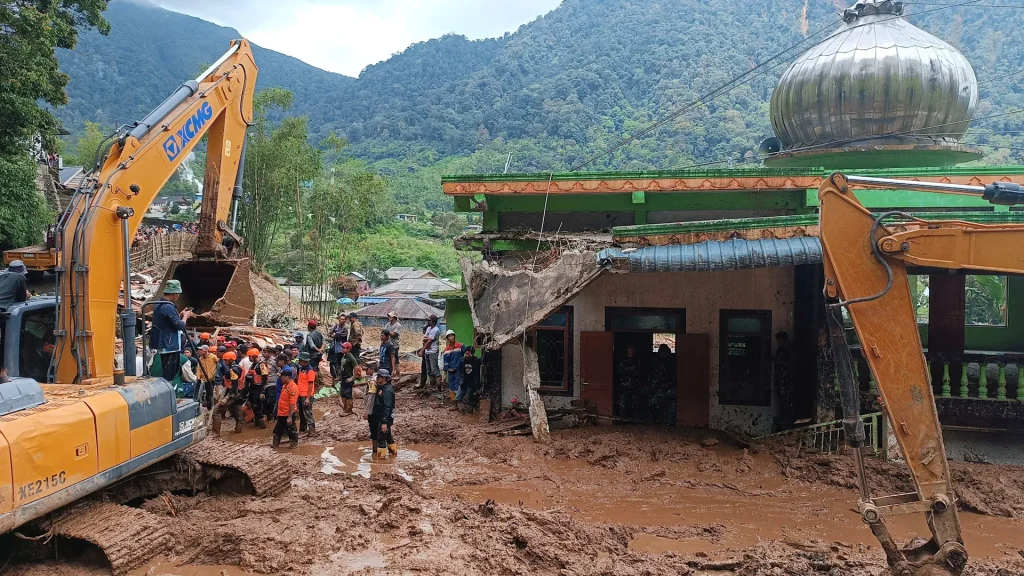

The devastating floods and landslides currently engulfing South and Southeast Asia, claiming over 1,300 lives across Indonesia, Sri Lanka, and Thailand, serve as a stark reminder: climate incidents are no longer isolated events. They are a global phenomenon, intensifying in frequency and severity, and demanding a unified, accelerated response. The record-breaking rainfall in Hat Yai, Thailand, its heaviest in 300 years, alongside the tragic loss of life and displacement of millions on Sumatra and across Sri Lanka, underscores a frightening new reality. The era of regional climate crises is over; we face a planetary emergency.
The escalating climate threat:
Data confirms this unsettling trend. Over the past five decades, weather-related disasters have surged fivefold globally. The World Meteorological Organization (WMO) reports that extreme weather events accounted for over 50% of all disasters in the last 50 years, causing 45% of deaths and 88% of economic losses. Between 2000 and 2019, major flood events increased by 134%, and severe storms by 203% compared to the two previous decades. These are not mere statistics; they represent a continuous, accelerating assault on lives, livelihoods, and ecosystems worldwide, from the unprecedented heatwaves in Europe to the severe droughts in the Horn of Africa and the intensifying hurricane seasons in the Atlantic.
The global action gap:
In response, international forums like the Conference of the Parties (COP) and the G20 have convened annually, promising ambitious climate action. The recently concluded COP30 in Brazil and previous G20 summits have undeniably raised global awareness and established critical frameworks. The Paris Agreement, a direct outcome of COP processes, set the ambitious goal of limiting global warming to well below 2°C. These platforms have fostered the creation of international climate funds, promoted technology transfer, and encouraged nations to submit nationally determined contributions (NDCs). For example, significant pledges have been made towards renewable energy transitions, and discussions around a global carbon market, although slow, continue to advance.
However, the efficacy of these grand declarations is often scrutinized. Critics argue that while commitments are plentiful, implementation lags. The United Nations Environment Program (UNEP) consistently highlights a significant “emissions gap”—the difference between projected emissions under current policies and those needed to meet the Paris Agreement targets. This suggests that the current pace of action is insufficient, leading to accusations of “lip service” masking a lack of tangible, transformative change.
Local action: a glimmer of hope
Conversely, at the sub-national level, a powerful movement is emerging. Many countries, and even individual cities, are demonstrating remarkable leadership. For instance, India’s Brihanmumbai Municipal Corporation (BMC) has established a substantial Rs 10,000 crore (approximately $1.2 billion) climate fund, specifically earmarked for initiatives to prevent drastic climate incidents and enhance urban resilience in Mumbai. This local commitment, often partnering with scientific experts and local communities, reflects a pragmatic understanding that climate action begins at home. Similar initiatives are seen in coastal cities investing in seawalls, urban centers promoting green infrastructure, and communities implementing early warning systems.
Development vs. climate:
Yet, this progress is frequently undermined by development and infrastructure projects that proceed with alarming disregard for climate impacts. The rampant deforestation of the Amazon rainforest for agriculture and mining, for example, not only destroys biodiversity but also reduces the region’s capacity to absorb carbon dioxide, directly contributing to global warming. In Southeast Asia, the rapid, unchecked expansion of palm oil plantations often involves clearing vital peatlands, releasing vast amounts of stored carbon, and increasing flood vulnerability. Similarly, coastal development in fragile ecosystems, such as mangrove swamps and coral reefs, removes natural buffers against storm surges and sea-level rise, leaving communities dangerously exposed. The pursuit of short-term economic gains often overrides long-term ecological and human well-being.
The disproportionate toll:
The disproportionate impact of climate incidents is undeniable. Women and children often bear the brunt, facing increased risks of violence, displacement, and disruption to education and healthcare in disaster zones. The UN Gender Snapshot 2024 estimates that climate change may push up to 158 million more women and girls into poverty by 2050, exacerbating existing inequalities. Furthermore, studies have linked climate stress, such as severe heatwaves, to a 28% increase in femicide in affected areas, highlighting the escalation of gender-based violence as resources dwindle.
Indigenous communities, intrinsically linked to their ancestral lands, face unique threats. For example, the Biloxi-Chitimacha-Choctaw tribe in Louisiana has lost 98% of its ancestral landmass due to sea-level rise and erosion, stripping them of traditional livelihoods, food sources, and cultural heritage. Similarly, Saami reindeer herders in Scandinavia face massive herd losses as mild winters turn rain to ice, preventing their reindeer from reaching vital lichen—a direct threat to their subsistence culture.
Nature, flora, and fauna suffer irreparable damage; the current extinction crisis is being accelerated by climate change. If global temperatures rise by 2°C, projections suggest that approximately 18% of all terrestrial species will face a high risk of extinction. Rising ocean temperatures cause coral bleaching, threatening the ecosystems that support 25% of all marine life. The current floods in Asia are not only devastating human populations but also wiping out local wildlife and agricultural land, pushing communities further into poverty and food insecurity.
The path forward:
To halt the accelerating crisis and ensure a just transition, we must immediately answer these critical questions with definitive action.
• How can policy move from goals to mandates? Mandate binding, measurable targets for all sectors.
• Who will finance the unavoidable climate change loss? Establish global financing for irreversible climate loss.
• How can private finance be rapidly scaled? De-risk private capital flows for green projects.
• How can we bridge the massive action gap? Integrate climate action into every policy.
• Where must funding be immediately redirected? Fund adaptation urgently, and stop all fossil subsidies; direct it to renewables.
• Who must lead resilience efforts on the ground? Empower local communities; they know best.
• Can we unify disjointed global efforts now? Strengthen global governance for coordinated, fast action.
• How do we protect our best natural defense? Invest significantly in nature-based solutions now.
Our take:
The “New Carbon Order” articulated by IETA, wherein carbon markets become core economic infrastructure, offers a promising pathway. But this paradigm shift must be coupled with radical policy reform and an unwavering commitment to sustainable development. The images from Asia are a global siren call. It’s time to move beyond fragmented responses and embrace a truly integrated, equitable, and actionable global blueprint for climate resilience. The costs of inaction now far outweigh the investments needed for a secure future.