

Carbon markets have fundamentally shifted their role.
These are the findings of the International Emissions Trading Association (IETA), which released its 2025 Greenhouse Gas Report, boldly titled “The New Carbon Order.”
The report argues that these mechanisms are no longer mere policy instruments but have evolved into the core economic infrastructure for the 21st century. Instead, carbon markets are a dynamic engine capable of solving the complex equation of global decarbonization without sacrificing economic competitiveness or sustainable growth.
The report launches at a “moment of truth,” according to IETA. It does not question whether markets are needed. Instead, it focuses entirely on how quickly global systems can be connected, scaled, and integrated. This imperative task aims to create a cohesive, borderless architecture. This structure ensures capital flows instantly to the lowest-cost abatement opportunities worldwide. Concurrently, it drives innovation across every economic sector.
The core economic shift:
The report emphasizes that the quantum of capital required for the global transition—trillions of dollars—cannot be mobilized through regulation or public funding alone. The success of “The New Carbon Order” relies entirely on the market’s ability to create powerful, clear incentives and price signals.
This emphasis on competitiveness dictates that appropriate accounting frameworks must be established to consistently make low-carbon growth more competitive and profitable than high-carbon alternatives. The message to the financial and industrial sectors is unambiguous: investing in low-carbon technology must be the most economically rational choice, ensuring a smooth, market-driven redirection of global investment flows.
Global cooperation:
According to the IETA report, achieving the necessary scale of emission reduction demands global diplomacy married to market efficiency, making mechanisms like Article 6 of the Paris Agreement non-negotiable.
Article 6 provides the essential diplomatic and legal links necessary to avoid a fractured, protectionist world of isolated and inefficient carbon bubbles. By facilitating international cooperation on emission reductions, companies and countries jointly undertake cross-border abatement projects. This structure is seen as crucial for leveraging cost efficiencies in regions where abatement is cheapest, ultimately lowering the total cost of achieving global climate targets and ensuring equitable outcomes across the global community.
Innovation as the digital backbone:
Technology is highlighted as an indispensable catalyst, with the report dedicating significant focus to the rapid evolution of the digital infrastructure underpinning market integrity and speed.
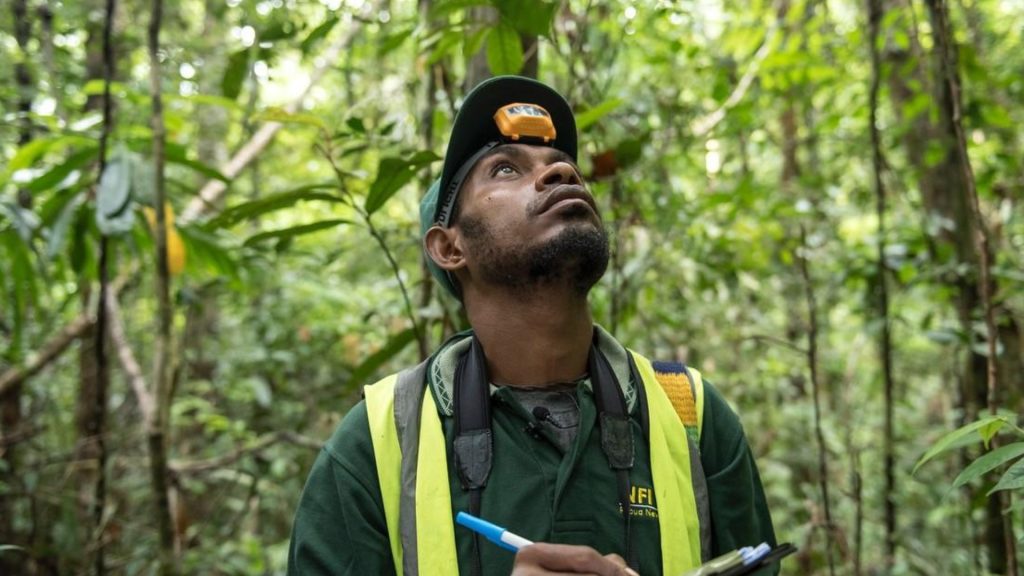
The confluence of AI-driven verification, digital measurement, reporting and verification (MRV), and blockchain registries is creating a robust digital backbone. This technology provides transparency, integrity, and operational speed, specifically detailed in the report’s deep dive into its deployment across land-use projects (forests), energy, and heavy industry. This digital assurance is essential for mobilizing confidence among investors and regulators, ensuring that every carbon reduction or removal credit represents a real, verifiable climate outcome.
A call for collaboration:
In conclusion, the report stresses that the ultimate success of this new carbon infrastructure hinges on a framework of radical collaboration—the essential meeting point of clear policy leadership and dynamic private-sector innovation.
Governments are charged with the foundational task of setting clear, ambitious frameworks, robust governance structures, and firm emissions caps that define the boundaries and rules of the game.
Businesses must then deploy the necessary capital, creativity, and execution at speed, translating policy signals into real-world projects.
The global community holds the mandate to demand credible, fair, and equitable outcomes, ensuring the market serves climate justice alongside economic efficiency.
By bringing together leading voices from industry, finance, law, policy, and technology, IETA’s The New Carbon Order serves as both a roadmap and a declaration, framing the integrated global carbon market as the single most powerful tool for steering the 21st-century economy toward net-zero.