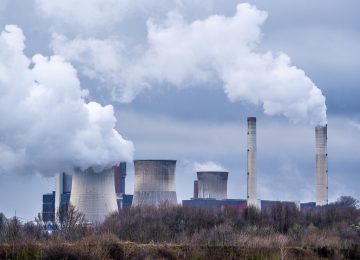
US Emissions Up 2.4%, Outpacing GDP
US GHG emissions rose 2.4% in 2025—outpacing 1.9% GDP growth—driven by colder winters and power demand, says Rhodium Group report.


US GHG emissions rose 2.4% in 2025—outpacing 1.9% GDP growth—driven by colder winters and power demand, says Rhodium Group report.

The boardrooms track every ton of carbon footprint; will they now seize the carbon handprint to lead the global green race?

NTPC-IITB (IIT Bombay) has completed India’s first test well for deep geological CO2 storage at Pakri Barwadih, marking a pivotal CCUS milestone.

Carbon markets now essential economic infrastructure; scaling and integrating global compliance and voluntary systems is vital

The first week of COP30 reflected a familiar pattern—strong commitments tempered by lingering gaps in finance, ambition, and implementation.

esgnews.earth completes its first year as a dynamic platform shaping India’s climate, ESG, and sustainability narratives.
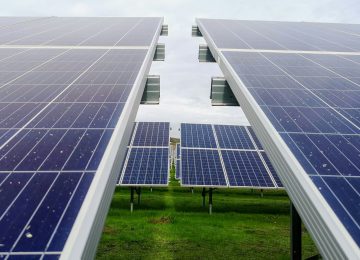
Solar capacity additions surged 70% to a record 29.5 GW in the first nine months of 2025 amid emerging grid and storage challenges.

The UN’s shipping regulator may adopt a global carbon levy on maritime emissions, triggering a policy clash between an EU-led bloc and the US.

Microsoft has introduced features in Azure API that reduces carbon emissions through real-time, carbon-aware and adaptive sustainability policies.

It mandates 282 high-emission industrial units in cement, aluminium, chlor-alkali, and pulp & paper to cut their carbon intensity over the next two years.

In an era of climate urgency and digital acceleration, enterprises are rethinking how they build, deploy, and scale artificial intelligence (green AI).

The Chinese government has announced that it will introduce absolute emissions caps for some industries by 2027.