

India’s textile industry is undergoing a dual transition. It is making strides in its sustainability journey. This is marked by rising renewable energy (RE) adoption. However, a critical paradox is emerging. The sector’s overall energy consumption, measured per unit of revenue, is also worsening. The sector’s overall energy intensity rose by 6 to 8 percent compared to FY2023 levels.
This finding comes from the new ICRA ESG Ratings Ltd. report, Sustainability Unstitched: Indian textile industry’s green gauge. The study analyzed the performance of 19 major textile firms from Financial Year 2023 (FY2023) to FY2025, including listed leaders like Page Industries Ltd, Welspun Living Ltd, Arvind Ltd, and KPR Mill Ltd.
Renewable adoption accelerates:
The textile sector’s commitment to cleaner power sources is clear. The average share of renewable energy in the sector’s total energy consumption grew notably. It rose from approximately 14 percent in FY2023 to nearly 18 percent in FY2025.
This shift is driven by segment-specific solutions:
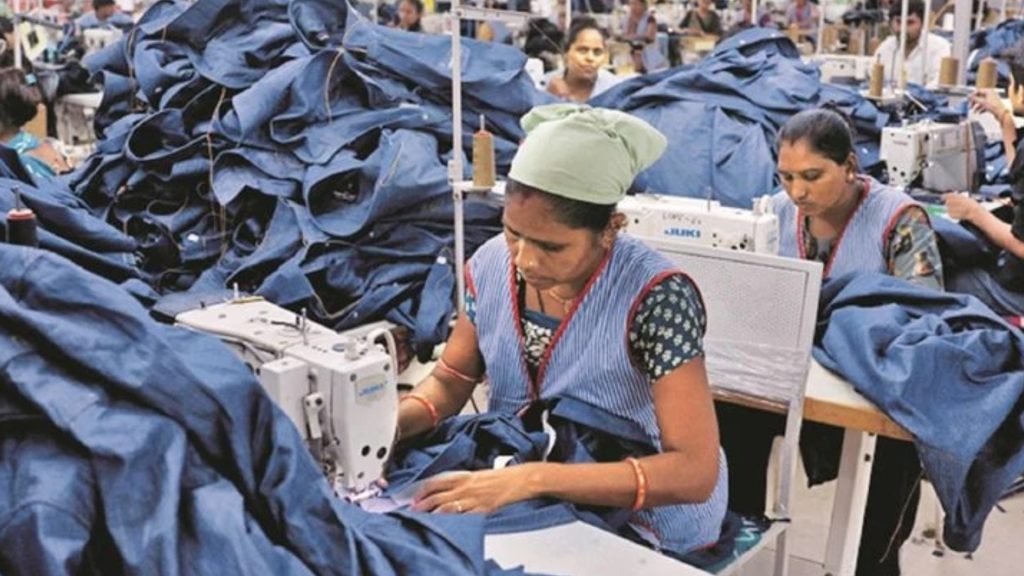
Apparel Segment: This segment led the adoption, with the RE share rising from 26 percent to 28 percent. This is mainly due to the feasibility of rooftop solar for their electricity-heavy operations (cutting and stitching).
Integrated Segment: These units advanced the RE share from 17 percent to 21 percent. This was achieved through leveraging bulk green power contracts and captive solar investments.
Yarn & Fabric Segment: This segment showed the steepest proportional improvement. Its RE share climbed from a low base of 3 percent to 8 percent through biomass-based solutions. Yarn and fabric firms utilize solar and biomass to offset high thermal energy demand in wet processing like dyeing.
The energy efficiency challenge:
The rising intensity signals that production volumes and complexity are outpacing efficiency gains. Upstream processes like spinning, weaving, and wet finishing remain energy-heavy. They continue to drive the sector’s overall energy footprint.
The energy intensity challenges vary sharply by segment:
Apparel Segment: Despite being the green power leader, it saw the steepest increase in energy intensity, surging by a notable 28 percent. This jump is attributed to scaling production and the increased use of premium, energy-intensive finishing processes.
Yarn & Fabric Segment: This highly energy-intensive segment posted an energy intensity increase of 8.5 percent. The report notes that this was partly linked to revenue contraction in FY2024, which inflated the ratio.
Integrated Segment: This segment proved the most resilient in efficiency. It limited the rise in energy intensity to only 6 percent. This stability is supported by strategic investments in process automation and waste heat recovery systems.
Emissions and transparency gaps:
Decarbonization efforts show a mixed picture. Integrated companies reduced their Greenhouse Gas (GHG) emission intensity by about 5 percent. Yarn and fabric firms cut theirs by around 8 percent. This indicates a positive shift in their fuel mix. In sharp contrast, the apparel segment recorded a 12 percent increase in emission intensity, driven primarily by higher output.
A critical issue across the entire sector is the lack of transparency in the value chain. Disclosure of indirect Scope 3 emissions remains extremely low. Only 21 percent of the sampled companies reported Scope 3 data in FY2025. This poses a significant barrier to global ESG compliance. International buyers increasingly demand full supply chain traceability, making improved Scope 3 reporting crucial for competitiveness.
A call for accelerated transition:
Sheetal Sharad, Chief Ratings Officer, ICRA ESG Ratings Ltd., provided the report’s outlook. She acknowledged the positive trend but emphasized the competitive necessity of higher ESG maturity.
“The textile sector’s sustainability transition is underway, but the pace must quicken,” she said. Sharad stressed that “For players that are part of global value chains, achieving higher ESG maturity will support competitiveness in the longer run.” She concluded that targeted interventions are necessary to ensure India’s textile leadership thrives in a sustainability-driven world, emphasizing investment in advanced technologies and renewable energy solutions for energy-heavy upstream processes.