

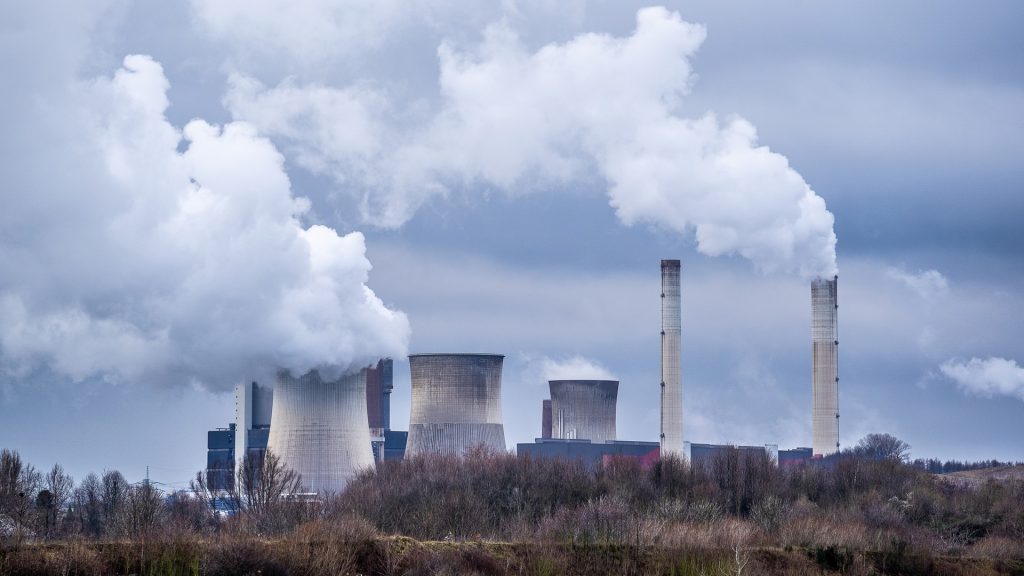

After two years of declines, US greenhouse gas emissions rebounded sharply by 2.4% in 2025, outpacing the economy’s 1.9% real GDP growth. It has reversed a trend where emissions decoupled from economic expansion, says a report published by the Rhodium Group. This marked the first increase after two years of declines, leaving total emissions 6% below 2019 pre-pandemic levels and 18% below 2005 baselines.
Primary Drivers in Buildings and Power Sectors
Colder winter temperatures spiked space heating demand, pushing building emissions up 6.8% or 56 million metric tons CO2e through greater natural gas and fossil fuel combustion. In the power sector, emissions climbed 3.8% or 55 million metric tons CO2e, fueled by a 13% rise in coal generation—the second increase in a decade—amid 58% higher natural gas prices at Henry Hub and 2.4% overall electricity demand growth.
Electricity demand surged in commercial buildings, including data centres and cryptocurrency mining, particularly in Texas, the Mid-Atlantic, and Ohio Valley, with residential use up 2.2% from heating and EV charging, and industrial at 1.9%. Coal retirements slowed to 2.5 GW through November, versus 4.5 GW in 2024, as utilities delayed shutdowns to meet needs.
Modest Shifts in Other Sectors
Industrial emissions grew 1.3% or 15 million metric tons CO2e, driven by output in chemicals, primary metals, and nonmetallic minerals, offset by declines in food, paper, and vehicles. Oil and gas production emissions edged up 0.5% or 1 million metric tons CO2e despite 4.4% natural gas and 2.8% petroleum output gains, thanks to a 44-62% drop in methane intensity since 2015.
Transportation, the largest emitting sector, stayed nearly flat at +0.1% or 2 million metric tons CO2e, as EV/hybrid adoption curbed gasoline use despite record road miles (up 1%) and available seat miles (up 2%). BEVs and PHEVs hit nearly 10% of passenger vehicle sales through November, hybrids 12%, though Q4 slowed after the federal tax credit expiration; diesel emissions rose on a 34% biomass diesel drop, boosting petroleum diesel 2%.
Grid Progress Amid Fossil Reliance
Solar generation leaped 34%—its fastest since 2017—lifting zero-emissions sources to 42% of the grid, with natural gas at 40% and coal/natural gas together at 57%. Wind, nuclear, and hydro showed minimal change, highlighting renewables’ gains against fossil competition.
Long-Term Outlook and Policy Impacts
Emissions have declined 1% annually since 2007’s peak, but 2025 policies from the 119th Congress and Trump administration—tax credit cuts, regulatory repeals, and DOE coal plant orders—projected a slower 26-35% drop below 2005 levels by 2035, versus prior 38-56% forecasts. Future risks include surging data center loads favoring existing fossils over new clean capacity and stalling EV growth without incentives.
Data collection faces threats, with potential EPA halts to GHG inventories and GHGRP reporting, complicating tracking of the world’s second-largest emitter. Rhodium Group’s analysis signals a critical juncture. The 2025 uptick, though modest against historical peaks, underscores the fragility of recent gains amid rising energy demands and fossil fuel reliance.