

In a series of landmark interventions in late 2025, India’s top courts have reinforced that while economic activity is necessary, it cannot come at the cost of public health or ecological survival. From the construction-heavy streets of Mumbai to the ancient ridges of the Aravallis, the judiciary is shifting from “blanket bans” to a stricter regime of mandatory compliance and scientific regulation.
Mumbai: compliance over shutdown
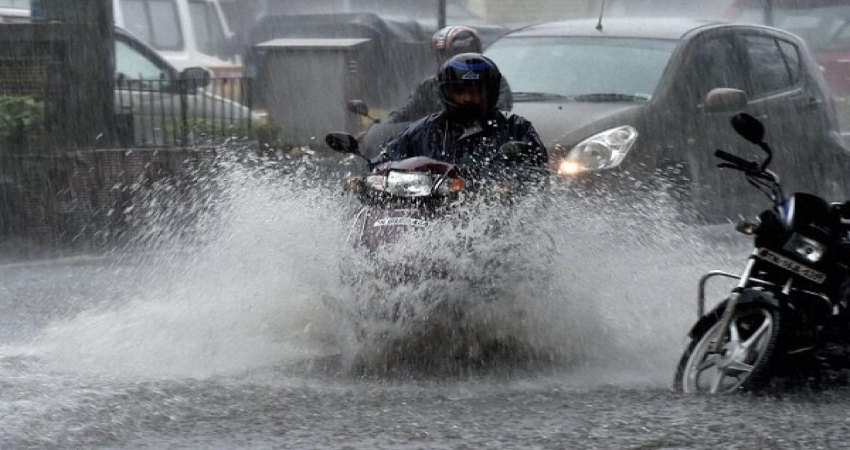
The Bombay High Court, while hearing a suo motu PIL on Mumbai’s deteriorating air quality, issued a stern warning to the Brihanmumbai Municipal Corporation (BMC) and the Maharashtra Pollution Control Board (MPCB). The bench, led by Chief Justice Chandrashekhar, clarified that the court does not intend to halt the city’s massive infrastructure projects or private development.
However, it expressed deep dissatisfaction with “cosmetic” compliance. Key highlights include:
Worker Safety: The court pulled up authorities for ignoring the health of construction workers, demanding they be provided with masks and protective gear as a “fundamental right to health.”
Failed Monitoring: Out of 1,080 mandated electronic sensors, nearly 220 were found to be non-functional or not transmitting data.
Threat of “Delhi-like” Crisis: The court warned that if enforcement remains lax, Mumbai will soon mirror the uncontrollable smog crisis seen in the national capital.
Aravallis: scientific freeze on mining
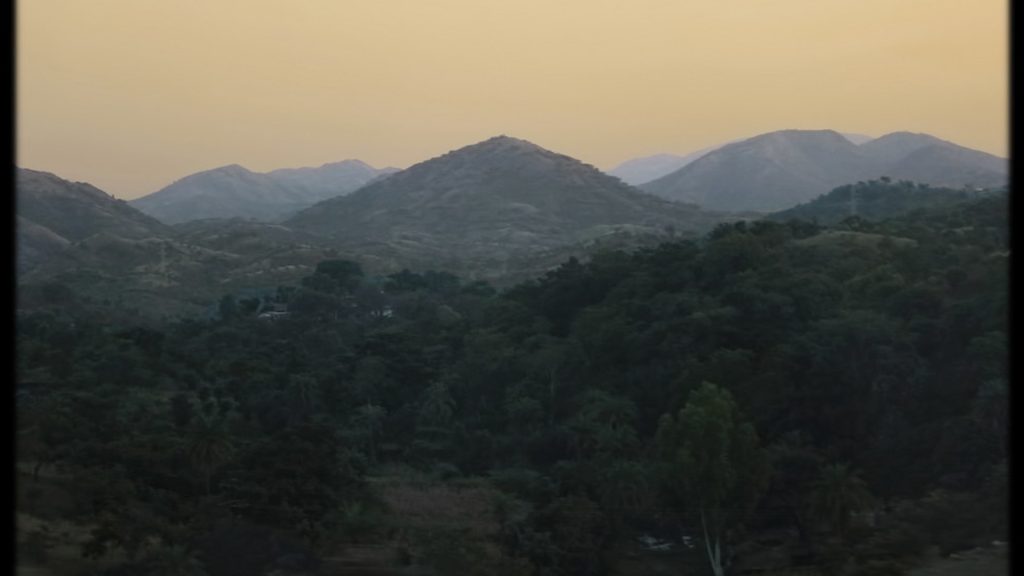
In a massive victory for conservationists, the Supreme Court of India (November 20, 2025) imposed an immediate freeze on all new mining leases across the Aravalli range spanning Delhi, Haryana, Rajasthan, and Gujarat. The ruling aims to prevent the “physical erasure” of one of the world’s oldest mountain ranges.
The court’s strategy includes:
The 100-Metre Rule: To close legal loopholes used by states to declassify hills, the court adopted a uniform definition: any landform rising 100 metres or more above local relief is legally a protected “Aravalli hill.”
Sustainable Management Plan: No new leases will be granted until the Indian Council of Forestry Research and Education (ICFRE) completes a landscape-wide “Management Plan for Sustainable Mining” (MPSM).
Curbing the Mafia: The court noted that total bans often fuel illegal mining. Therefore, existing legal mines can continue, but only under high-tech surveillance, including AI-driven satellite monitoring and drones.
The Judges’ Words: Bombay High Court
Bench: Chief Justice Shree Chandrashekhar and Justice Gautam Ankhad
During the December 2024–2025 hearings, the bench directed its scrutiny toward the “invisible” victims of pollution—the labor force—and the negligence of monitoring agencies.
“We do not want any construction work or development to stop, but we want compliance. You [authorities] have failed to ensure compliance. If things go out of hand, then nothing will remain within your control. We have seen that in Delhi for the last several years.”
“The workers are exposed to severe pollution and health threats. You don’t take care of the poor. At least have the masks. Right to health is a fundamental right.”
The Judges’ Words: Supreme Court of India
Bench: Retired Chief Justice BR Gavai and Justice Abhay S Oka
The apex court focused on the “physical erasure” of the Aravallis and the failure of states to provide a scientific definition to protect the hills.
“Illegal mining in the Aravallis has to stop… Otherwise, what is the benefit of having only skeletal structures in the name of mountains? A balance has to be made between sustainable development and protection of the environment.”
“Aravalli is the only geographical feature that stops dry winds from coming to the Gangetic Plains. It is a natural barrier. If we lose the Aravalli, we invite the arid, dry climate to enter from Afghanistan and Pakistan.”
These rulings signal a transformative era in Indian jurisprudence where environmental accountability is no longer a secondary concern to industrial growth. By focusing on granular details—from the availability of N95 masks for laborers in Mumbai to the satellite-mapping of 100-meter hills in the Aravallis—the courts are moving away from symbolic gestures toward a hard-coded, “scientific” enforcement of the law.