

This isn’t about distant polar bears or melting glaciers but about how climate change shed its skin, crawled out of the television, and became part of our routine life. It is now sitting at our kitchen tables, breathing in our gardens, haunting our dreams. Undoubtedly, it has become personal. And this isn’t a noble awakening; it’s a visceral, ugly, and deeply unsettling colonization of our private lives.
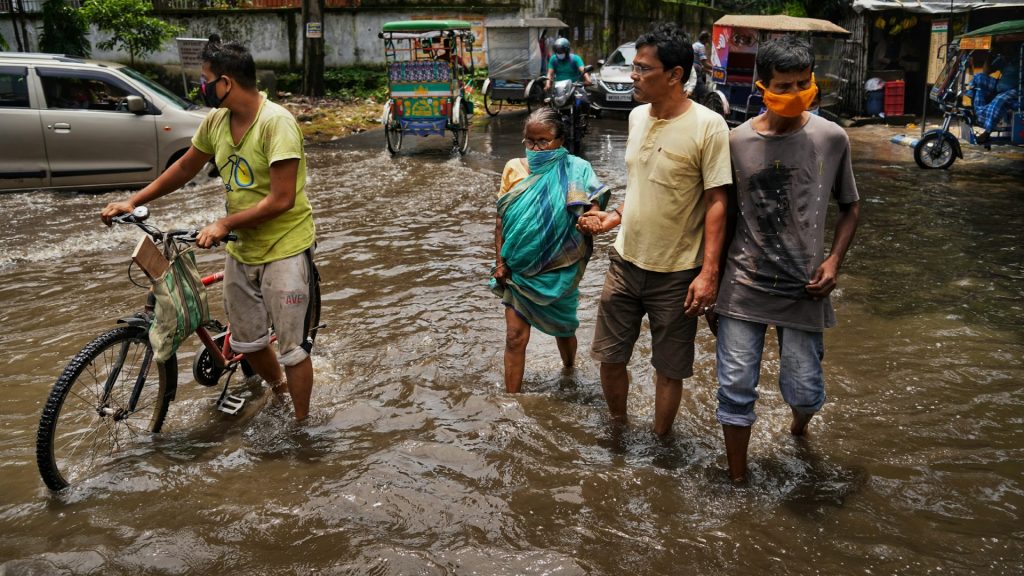
The climate crisis in India is a harrowing reality for millions. In 2025, catastrophic monsoons alone caused over 1,500 deaths. With floods, landslides, crippling infrastructures, and displacing millions. Climate change is striking at the very heart of the larger communities and livelihoods with frightening regularity.
The soaring heatwave has left India reeling. Official reports show 84 heat-related deaths this year, but experts estimate the real numbers to be much higher. The intensification and frequency of these heatwaves have made summer months agonizingly lethal, particularly in states like Maharashtra, Telangana, and Gujarat. Research warns that if this trend continues, heatwaves alone could lead to 150,000 excess deaths nationally in a typical year, threatening public health on a nightmare scale.
It’s the present. India is a climate hotspot.
The India Meteorological Department (IMD) states that heatwaves now arrive earlier, last longer, and are more severe. IMD’s Climate Hazards Atlas shows a terrifying trend: a decrease in total rainy days but a 100% increase in heavy to extreme rain events since 1950.
But that sterile term (climate hotspot) dissolves in the sweat of a 45°C April afternoon in Delhi. For the person navigating that oven, it’s not a data point; it’s a physical assault that dictates if they can walk to work, if their child’s school will close, and if the ceiling fan just stirs hot, metallic air.
Stolen Breath
The new terms carbon ppm, AQI and emissions are part of the daily conversations. The enduring air pollution crisis silently suffocates the nation. Air pollution-related deaths hit a staggering 38% rise over a decade. Cities like Delhi, Ghaziabad, and Baghpat record hazardous air quality levels regularly. The air you breathe is beyond any healthy parameters for many cities in India. The Central Pollution Control Board (CPCB) readings show Delhi’s air a perennial toxic gauze. When the AQI crosses 500, it’s not a number; it’s the tightness in your chest, the sting in your eyes, and the quest for clean air.
Recalling here, India holds 21 of the world’s 30 most polluted cities in the world. That’s not a ranking; it’s a dangerous diagnosis for millions of lungs.
The bitter reality
A 2025 survey of over 10,000 people found that 91% said they have personally experienced the effects of global warming. Be it through floods, heatwaves, water shortages, or polluted air. More than half of the respondents are deeply concerned about extinctions, heat stress, agricultural loss, and power outages linked to climate shifts. Yet, alarmingly, 38% still question the human role in this crisis, highlighting a dangerous delay in public acceptance of climate science. This undermines urgency for policy action.
The cruelest personal calculation, however, is economic. As per the Council on Energy, Environment and Water (CEEW), 80% of India’s population lives in districts highly vulnerable to extreme climate events.
For a farmer in Punjab, climate change is the whitefly pest that decimates his cotton or the unseasonal March rain that flattens his ready-to-harvest wheat.
For the migrant worker from drought-ravaged Bundelkhand, it’s not a climate migration statistic. But the train ticket to a city slum, bought with the last of the family’s savings. It’s personal, financial, and a struggle to live, dictated by a disrupted atmosphere.
The WMO recorded 2023 as the hottest year on record globally. But it is refreshing the data with every passing month with higher numbers. Leaves me wondering, should we mourn the death of seasons?
For me personally, in Kerala, it’s the memory of predictable, gentle Thulavarsham (the October-November rains/return monsoon) now replaced by violent, flooding downpours that wash away paddy and peace.
You become an archivist of a lost normal, clutching fading memories of cooler summers and reliable monsoons.
The 1.5°C global target feels meaningless when your local temperature has already jumped by over 2°C in many regions. The global becomes local and becomes “lived.”
The systemic failure has been downloaded into our personal anxiety. When residential electricity demand for cooling skyrockets, accounting for 40-50% of summer peak demand, the blame and burden are placed on our consumption and our AC units. While the grotesque spectacle of coal power plants, which remain the main energy producer, continues unabated.
Behind these numbers are personal stories of loss and resilience. Communities mapping flood zones and rebuilding climate-proof homes—all narratives revealing the intimate human toll of climate change today.
This is no longer an abstract problem confined to reports; it is daily survival, illness, loss, and fear in the streets, homes, and lungs of people. The climate crisis has unequivocally become personal.
Despite growing evidence, there remains a chasm between knowledge and action in India,– between the undeniable personal impacts and policy responses. It demands nothing less than immediate, just, and inclusive action.
Our guilt is personal and paralyzing. And for 1.4 billion of us, it hurts like hell.