
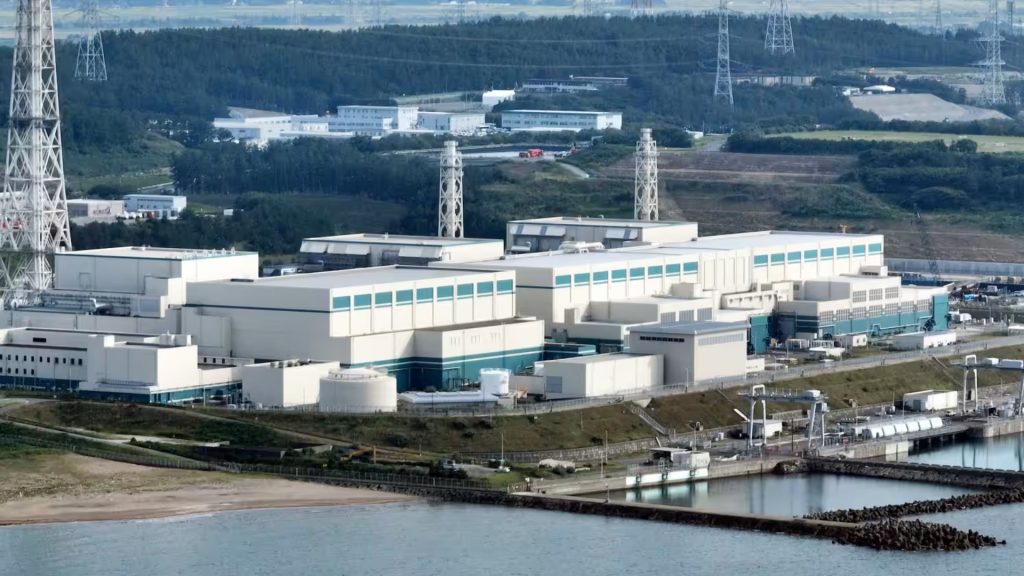

Japan is moving to reactivate the world’s largest power-generating asset, the Kashiwazaki-Kariwa Nuclear Power Station, following a 15-year hiatus.
The Niigata Prefectural Assembly in Japan has passed a critical vote of confidence in Governor Hideyo Hanazumi’s decision to approve the restart of the Kashiwazaki-Kariwa facility.
The project represents a critical pivot for Tokyo Electric Power Company (TEPCO) as it transitions from a decade of decommissioning focus back to active generation. With Japan facing rising electricity demand from AI data centers and a $68 billion annual bill for fossil fuel imports, the commercial viability of this 8.2-gigawatt (GW) project is now central to the nation’s industrial strategy.
Project scope and capacity:
The phased restart begins with Unit 6, an advanced boiling water reactor (ABWR) with a net capacity of 1,356 MW.
Timeline: Operations are scheduled to commence on January 20, 2026, with full commercial service expected by the end of March 2026.
Grid Impact: The Ministry of Economy, Trade and Industry (METI) estimates that Unit 6 alone will increase the Tokyo metropolitan area’s power supply by 2%.
Future Phases: Plans are already in motion to bring Unit 7 (another 1.36 GW unit) online, eventually restoring the site’s total 8.2 GW capacity.
Financial metrics:
The project is a major revenue driver for TEPCO as it seeks to fund the ongoing $150+ billion cleanup costs from the 2011 Fukushima accident.
Profitability: The restart of Units 6 and 7 is projected to increase TEPCO’s annual earnings by approximately $641 million (¥100 billion) through the displacement of expensive Liquefied Natural Gas (LNG) imports.
Local Investment: TEPCO has committed a $641 million (¥100 billion) regional stimulus package over ten years to support Niigata’s local economy and infrastructure.
Cost Efficiency: Replacing fossil fuel generation with nuclear power at this scale is estimated to reduce Japan’s national carbon emissions by 3.3 million tons annually.
Technical modernization:
Since 2011, the facility has undergone an extensive technical overhaul to meet the world’s most stringent safety standards. Key project upgrades include:
Seismic Reinforcement: Strengthening reactor buildings to withstand extreme ground acceleration.
Tsunami Defense: Completion of a 1.5-kilometer reinforced concrete seawall reaching 15 meters above sea level.
Emergency Resilience: Installation of independent “Specified Safety Facilities” (anti-terrorism bunkers) and a 20,000-ton freshwater reservoir for emergency cooling.
The backdrop:
The Kashiwazaki-Kariwa plant, an 8.2-gigawatt behemoth, has been largely idle since a 2007 earthquake and was completely shut down following the 2011 Fukushima disaster. As the world’s largest nuclear power station by capacity, its return is a symbolic and economic milestone for Japan, which has struggled with high energy costs and a heavy reliance on imported fossil fuels since the triple meltdown fifteen years ago.