

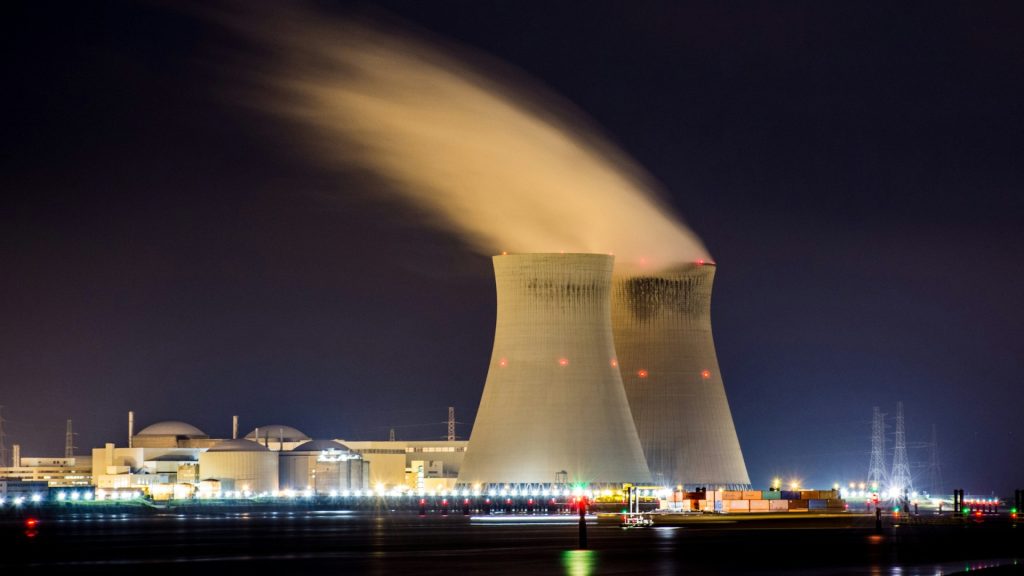

The country’s ambitious nuclear energy program, for decades, has been a story of immense potential, perpetually waiting to be unlocked. The recent decision to open India’s nuclear energy sector to private players aims to address this perennial issue. Also, accelerate capacity growth and attract investments.
However, it also risks exacerbating longstanding challenges in execution, regulatory hurdles, and strategic vulnerabilities, potentially undermining energy security.
India aims to get 500 GW of its electricity from non-fossil fuels by 2030 and achieve net-zero emissions by 2070. Nuclear power is key because it provides reliable, steady baseload energy that complements the intermittent solar and wind power. This makes it crucial for attaining energy security and climate mitigation goals.
Yet, the sector has consistently struggled to meet its own targets. The question now being asked —the participation of the private sector—can finally be the key that unlocks this clean energy powerhouse.
Historically, the entire nuclear energy ecosystem has been the exclusive domain of a government-owned entity, the Nuclear Power Corporation of India Limited (NPCIL).
Following the 2008 waiver from the Nuclear Suppliers Group (NSG), India hoped for a rapid influx of foreign reactor technology (like from Areva and GE-Hitachi) and fuel. These deals were slow to materialize.
Building a nuclear power plant is incredibly capital-intensive.
The result? Nuclear energy’s contribution to the energy basket remained stagnant with single (5-7%) digit contributions.
Coal shift and strategic dual-use
Transitioning from coal to nuclear could cut import bills (coal/oil/gas at 80% of energy needs) and emissions. But private dominance raises fears of fragmented supply prioritizing commercial viability over grid stability or rural access.
Geoeconomic uncertainties, including US-India civil nuclear pacts strained by liability rows, could hobble technology access, making energy security a gamble on untested public-private hybrids.
Public opposition, fueled by safety fears post-Fukushima Daiichi (the disaster in Japan was a stark reminder that private utility companies (TEPCO) were culpable for safety negligence), amplifies delays, questioning if liberalization prioritizes profits over national safeguards.
In the United States, the Vermont Yankee and Indian Point plants have been cited for numerous safety violations under private ownership, often linked to cost-cutting.
However, the promise of bridging India’s yawning energy deficit and meeting its climate commitments drives this move.
Growth drivers:
The current installed capacity hovers at 8.9 GW, and with only 6.6-8.7 GW under construction. The nuclear energy capacity addition in the country was not very promising. The projects were marred by chronic delays from land acquisition issues, cost overruns, and uranium import dependence. This leaves ambitious targets, such as 22 GW by 2032 and 100 GW by 2047, perilously out of reach without radical reforms. Not forgetting the significant capital requirement. That is where private capital is positioned as the essential catalyst.
- The country’s per capita electricity consumption is still below 1500 kWh, much lower than the global average.
- The indigenously developed PHWR (Pressurized Heavy Water Reactor) is the cornerstone of a new era in nuclear energy.
- It aims to enable joint ventures for Small Modular Reactors (SMRs).
- The government has allocated Rs 200 billion for research and development and has at least five locally made SMRs by 2033.
- The hope of creating a domestic nuclear energy industrial ecosystem, reducing reliance on expensive foreign imports.
- As a signatory to the Paris Agreement, India has committed to generating 500 GW of power from non-fossil fuels by 2030.
- Nuclear power, being a stable, baseload energy source with near-zero operational emissions, is indispensable.
Capacity addition roadblocks:
India’s nuclear expansion stalls due to protracted licensing, environmental clearances, and land disputes, as seen in the beginning of projects like Kudankulam. This resulted in extending timelines by years and inflating costs beyond initial estimates.
Large private firms hesitate to enter the nuclear segment amid high capital needs and uncertain returns.
Fuel scarcity is another factor. India holds just a minuscule percentage of global uranium reserves. This forces high import reliance from geopolitically volatile suppliers like Russia and Kazakhstan, exposing the supply chain’s frailties.
Regulatory and liability pitfalls
The most potent argument against privatization is the inherent conflict between profit maximisation and nuclear safety. NPCIL operates under a culture of extreme caution, insulated from market pressures to cut corners. Introducing private players, accountable to shareholders, creates a dangerous incentive to reduce costs on maintenance, safety protocols, and workforce training.
The Atomic Energy Act (1962) mandates 51% government equity, blocking true private ownership and deterring $26 billion in projected investments.
Budget 2025-26 announced to amend its nuclear liability legislation to limit accident-related penalties for equipment suppliers to revive foreign investment to boost growth in the nuclear sector. While the Civil Liability for Nuclear Damage Act (2010) uniquely burdens suppliers with “no-fault” liability, repelling foreign tech partners, unlike global norms.
How the Private Sector Can “Fix” the Problem
The primary advantage is the capital investments, reducing the fiscal burden on the government. Financial models like Build-Own-Operate (BOO) or even the proposed PPPs can attract long-term institutional investors.
Private firms can now invest in mining, potentially unlocking the uranium and the vast thorium reserves (estimated at 360,000 tonnes)
The private sector is being encouraged to manufacture critical components, instruments, and supplies for nuclear plants.
While NPCIL will remain the owner-operator of nuclear plants, the new policy paves the way for Public-Private Partnerships (PPPs).
Better project management, discipline, technological innovation, and efficiency in construction. This could significantly reduce the timeline for a new plant.
Private investment in allied research, particularly in Small Modular Reactors (SMRs) and advanced thorium fuel cycles, could accelerate the journey to its third stage of nuclear power (thorium-based).
Path forward:
True energy security demands not just private capital but ironclad reforms. It also calls for thorium-based indigenous tech to slash uranium dependence. Without these, liberalization risks becoming a hollow promise. Forging a resilient nuclear backbone is necessary. But it is not a commodity but a national strategic asset where safety must be paramount, even at the cost of speed and profit.
The private sector can be a powerful catalyst, but not a standalone cure. By creating a collaborative model, India is betting on public- private sector combination to light up its future without polluting its skies.